
8000 BC BABYLON COUNTING TOKENS ENVELOPE SHAPES
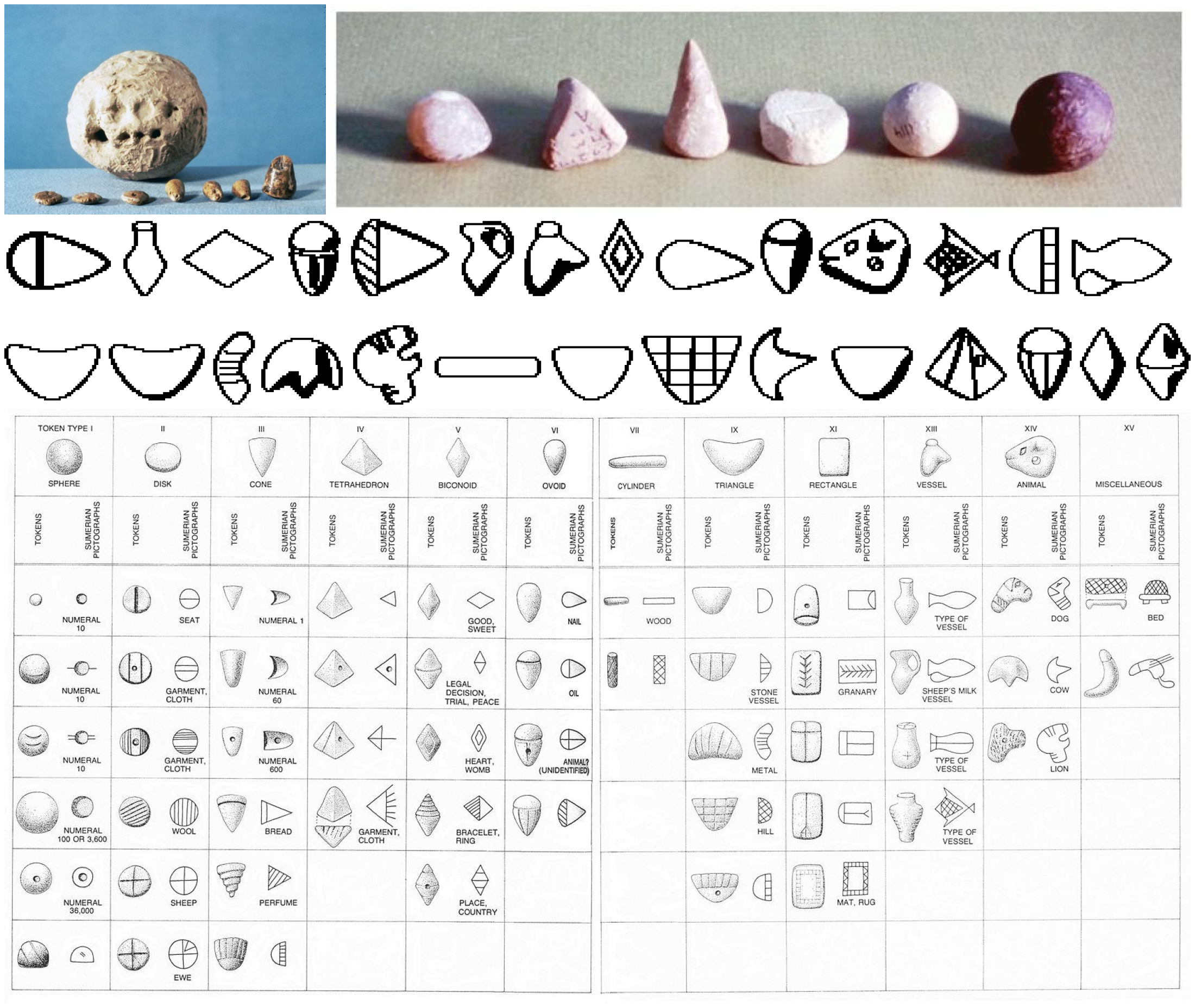
Small shaped clay counters, cones, spheres and discs, each standing for a fixed quantity of a commodity such as grain or livestock, sealed inside a hollow clay envelope marked on the outside to show what it held. The practice runs from roughly the eighth millennium BC and is read by many scholars as a direct ancestor of cuneiform numerals and of writing itself.
The card
- Date — 8,000 BC
- Where — Southern Mesopotamia (Babylon marks the general region; clay counting tokens are documented across many Sumerian and Elamite sites, not one single find-spot). 32.5364, 44.4207 — approximate
- Evidence grade — WEB-PHOTO
Sources
Works Cited
- Source, Title, Publisher, Year.